Detect. Act. Protect.

America's AI-Powered
Biological Intelligence
Service

BioRadar is the nation's first continuously operating, AI-enabled biological intelligence service — designed to detect emerging threats before they spread, characterize risk in real time, and deliver decision-ready intelligence to those who need it most.

99%
Drop in CRISPR gene-editing costs since 2012
Increase in BSL-3/4 labs worldwide since 2020
$14T
is the cost of a single pandemic
BIO RADAR DATA // ACTIVE
The Problem

Our Biological Risk Environment
Has Permanently Changed

Engineering pathogens is now fast, cheap, and accessible
What once required a nation-state now requires a lab bench. AI, synthetic biology, and gene editing have permanently lowered the barrier.
Natural outbreaks are accelerating
Climate change, urbanization, and global travel create more frequent spillover events from animals to humans.
The world is saturated with high-risk labs
BSL-3 and BSL-4 facilities have doubled worldwide since 2020, across dozens of countries with widely varying biosafety oversight.
Detection capability has not kept pace
Today's systems are reactive, episodic, and fragmented. By the time a threat is detected, the window for early intervention is already closed.
Platform Capabilities

Mission-Grade
Biological Intelligence

CAP-01
?
Threat-Agnostic Detection
Detects known pathogens, new variants, and previously unknown or engineered threats — not just a limited list of pre-specified diseases traditional systems look for.
CAP-02
Baseline-Driven Intelligence
Builds continuous biological profiles per community to detect deviations the moment they emerge.
CAP-03
Multimodal Data Fusion
Integrates wastewater metagenomics, air sampling, syndromic hospital data, pharmacy data, and behavioral signals.
CAP-04
Metagenomic Environmental Sensing
Sequences everything in a sample — known pathogens, new variants, unknown organisms, and engineered threats.
CAP-05
Decision-Ready Intelligence
Converts complex biological data into prioritized threat assessments, early warning alerts, and operational guidance for leaders.
CAP-06
Continuous Learning
AI models that improve as new threats emerge, never locked to a fixed signature library.
Methodology

From Data
to Intelligence

01
Data Collection
Environmental metagenomic sampling (wastewater + air), syndromic hospital data, pharmacy utilization, and behavioral/digital signals collected continuously across communities.
02
Baseline Establishment
Advanced ML models establish normal biological profiles for each community — the foundation for detecting meaningful anomalies versus background noise.
03
Anomaly Detection & Analysis
Deviations from baseline trigger automated review. AI characterizes risk, assigns confidence levels, and identifies potential threat signatures.
04
Decision-Ready Intelligence
Leaders receive early warning alerts, clear risk assessments, visual intelligence dashboards, and action-oriented operational guidance.
Who We Serve

When Threats Are Detected Sooner —
The Nation Is Safer

Department of Defense
Protect the warfighter and maintain force readiness against biological threats.
Public Health Agencies
Deploy targeted interventions instead of broad, damaging shutdowns.
Hospitals & Health Systems
Optimize staffing, ICU capacity, and supplies before surges arrive.
State & Local Government
Coordinate response, stabilize services, and build public confidence.
Schools & Universities
Adjust safety protocols while staying open and operational.
Businesses & Employers
Protect workforce continuity and operations with advance warning.
Leadership

Led by Those Who
Have Done It

BioRadar's founders have served at the highest levels of the U.S. government's biological threat response.
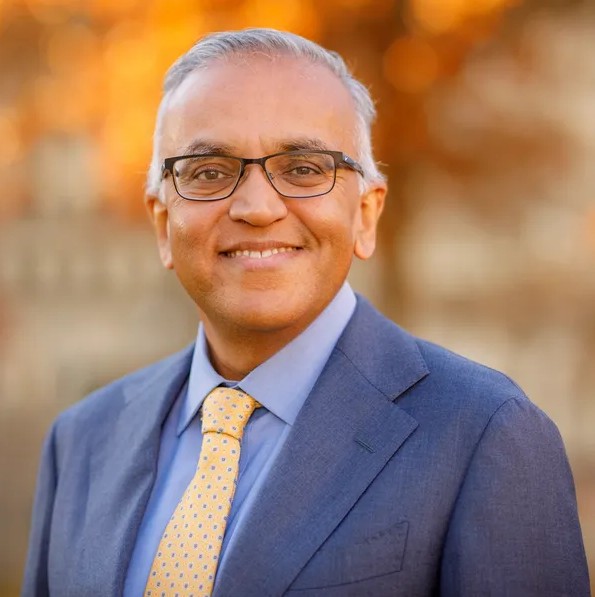
Dr. Ashish K. Jha
Ashish K. Jha, MD, MPH
Co-Founder & CEO
Dr. Jha is a practicing physician and globally recognized expert on major issues impacting public health, and a catalyst for new thinking and approaches. A long-time leader in pandemic preparedness and response, his work spans groundbreaking research on Ebola and frontline leadership during the COVID-19 pandemic, advising local, national, and international policymakers. In March 2022, President Biden appointed Dr. Jha as White House COVID-19 Response Coordinator, describing him as "one of the leading public health experts in America." In this role, he led efforts to expand access to vaccines and treatments, strengthen testing and surveillance, invest in indoor air quality, and build durable infrastructure to respond to current and future disease threats. Dr. Jha previously served as Dean of the Brown University School of Public Health, held faculty appointments at Harvard Medical School and Harvard T.H. Chan School of Public Health. Dr. Jha holds an academic appointment as a Senior Fellow at Harvard Kennedy School's Belfer Center for Science and International Affairs.
White House COVID-19 Response Coordinator Dean, Brown School of Public Health Harvard Global Health Institute National Academy of Medicine MD, Harvard Medical School MPH, Harvard T.H. Chan School of Public Health
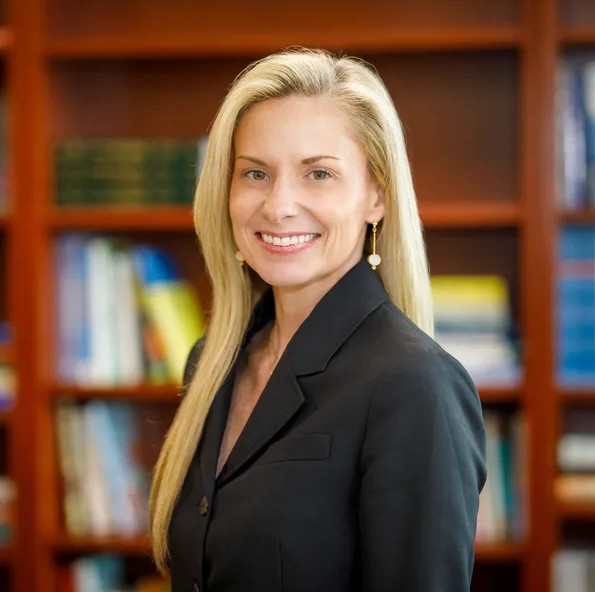
Dr. Nikki Romanik
Nikki Romanik, MD
Co-Founder
Dr. Romanik is a physician and policy strategist with deep experience leading U.S. preparedness and response to high-consequence biological threats. She previously served at the White House as Special Assistant to the President, Deputy Director, and Chief of Staff for the inaugural Office of Pandemic Preparedness and Response Policy (OPPR), where she helped establish the office and coordinate federal responses to major outbreaks, including mpox, COVID-19, and Marburg virus disease. Prior to OPPR, she served as Senior Policy Advisor for the White House Mpox Response.

Following her White House service, she was a Distinguished Senior Fellow in Global Health Security at the Brown University School of Public Health.

Earlier in her career, Dr. Romanik held senior leadership roles at the Centers for Disease Control and Prevention (CDC), the U.S. Department of Health and Human Services (HHS), and the World Health Organization (WHO). During the COVID-19 pandemic, she served as the CDC COVID-19 Liaison to the White House and HHS.

She is an Advisor to Network 20/20 and holds academic appointments at Georgetown University Medical Center and the Georgetown/MedStar National Center for Health Security and Resilience.
White House OPPR Deputy Director & Chief of Staff Special Assistant to the President Senior Policy Advisor, White House Mpox Response CDC · HHS · WHO Georgetown University Medical Center Georgetown/MedStar National Center for Health Security Network 20/20 Advisor Distinguished Senior Fellow, Brown SPH